
Container to truck. Container to consumer.
A secure, expert-handled transition from international container to over-the-road truck, minimizing both cost and transit time.
Transloading is the difference between a shipment that sits and a shipment that moves.
- Direct container-to-truck transition under our Port of Virginia roof
- Reduces per-mile cost on inland deliveries by eliminating chassis dwell
- Compatible with 20′, 40′, 40′ HC and 45′ HC ocean containers
- Trained crews handle palletized, floor-loaded and break-bulk freight
- Real-time visibility from container release to outbound dispatch
Have a load waiting? Get pricing in one business hour.
Built for international shippers.
Containers from Asia, Europe and the Mediterranean discharge at the Port of Virginia and are turned into outbound truck loads within hours, not days. Our adjacency to the port saves you demurrage and per-diem charges that compound on every delayed unit.
One accountable partner.
Because Carroll owns the warehouse, the equipment and the trucks, you have one team responsible for every move. No handoffs between vendors, no finger-pointing, just a single operations contact from container release to final delivery.
Prefer to walk through the details?
Our team picks up.
Transloading, in plain English.
Transloading is the transfer of goods from one mode of transportation to another during shipping. A load might arrive on a ship, get transferred to truck at the port, then transferred again to rail for its long inland leg. It is one of the most important steps in supply chain management. It speeds the flow of goods, cuts cost, and lets shippers adapt to route congestion, tariffs, and capacity constraints in real time.
It solves the practical problems every international shipper eventually faces: no direct route, limited road access at the origin, transportation obstacles, or costs that no longer pencil out on a single mode.
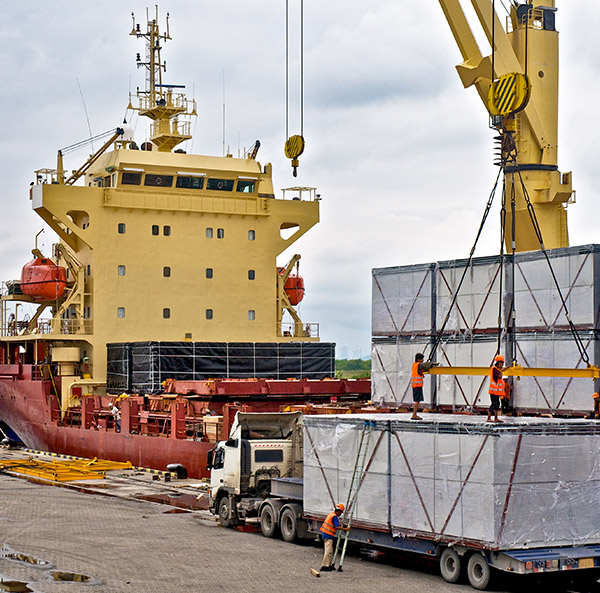
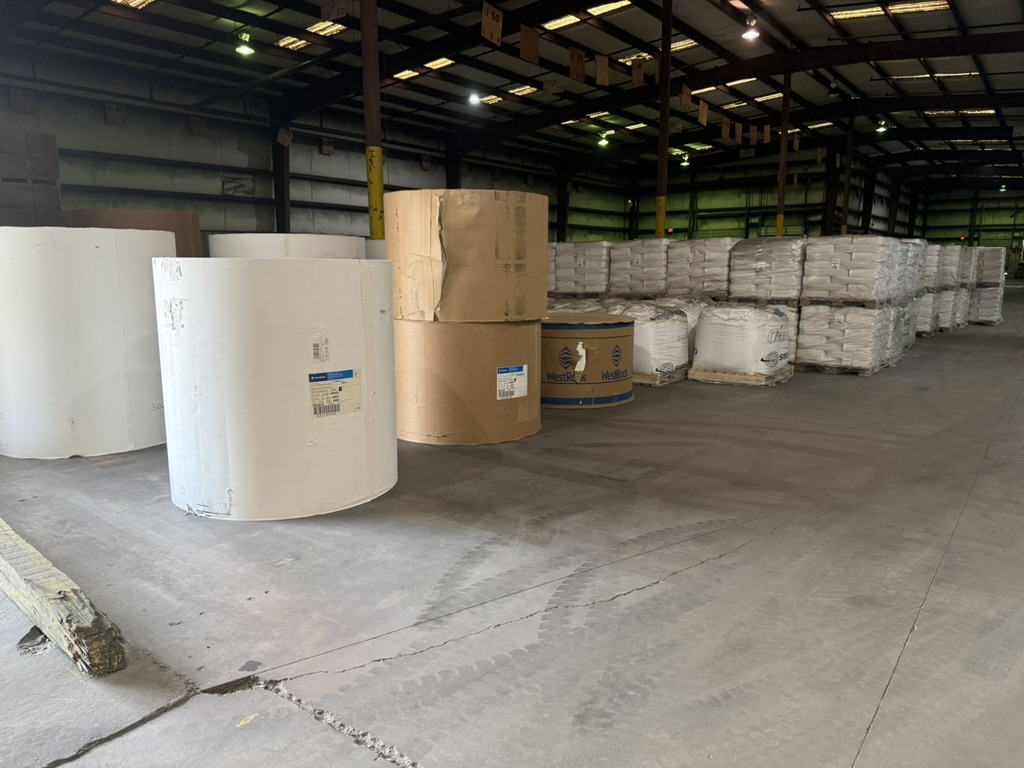
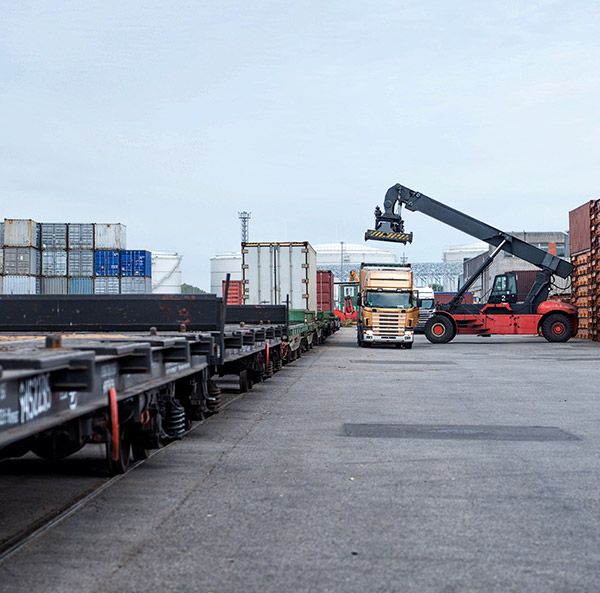
See transloading in motion.
Inside Carroll’s transload operation.
Six ways we move your product.
Barge Transloading
For big-volume moves across inland waterways, up to 1,500 tons in a single shipment at unmatched fuel efficiency.
Bulk & Dry Bulk
Coal, farm feed, food-grade product, fuel, lumber, minerals, plastics: commodities that don’t ship well palletized.
Rail Transloading
Bridge the gap between truck and rail. Ideal for inland destinations without direct truck access.
Refrigerated
Climate-controlled handling with food-grade requirements maintained end-to-end.
Ocean Container
Three 40′ ocean containers into two 53′ domestic trailers, recovering per-diem and free up steamship equipment.
Roll-on / Roll-off
Consolidate and load onto vessels or trucks without incurring break-bulk cost.
Why shippers transload.
Better economics. One rail car moves what three to four trucks move, at nearly four times the fuel efficiency.
Faster container turns. Recover per-diem, free up steamship equipment, and strengthen your ocean rate leverage.
Product keeps moving. One consolidated shipment, one invoice, less time accruing storage fees.
Commodities across every sector.
- Building Materials
- Food & Beverage
- Hazardous Materials
- Bulk & Dry Bulk
- Oversized Freight
- Vehicles & Equipment
Plus general freight, retail goods, and specialty cargo on request.
Transloading, answered.
What Does a Transloader Do?
The growth in e-Commerce sales has increased the need for fast and efficient shipping. The demand has grown further by retailers offering various options for fast delivery, like overnight and same-day shipping. When an order is placed, whether, from a retailer or a consumer, it could take more than one delivery method. The logistics of figuring out the best shipping methods fall on the 3PL. The goods usually come from a place like a factory or a warehouse. Logistic factors to consider include things like: Cost Delivery schedule Route congestion Slowdowns Tariffs and taxes Available ports In some instances, you must calculate the good value depreciation of the merchandise. Once logistics have been formulated and the goods are ready to get shipped, the transloading process can begin. If these factors don’t add up to the number of shipping methods you need, you’ll need a transloader. They specialize in managing the mix of new-age tech and old-age logistics infrastructure. The demand for transloaders continues to grow. Using multiple shipping methods, they must keep up with the demand to get goods from place to place faster.
What is an Example of Transloading?
We know that transloading is when cargo has to move from one form of transportation to another. Three examples of transloading include the following: Example 1: A shipping container starts as a railroad car but can’t reach where it needs to go. It’s then offloaded from the container onto a truck. Example 2: A plane lands at the airport. The cargo is transferred onto the truck for final delivery to complete the journey. Or a cargo ship loads onto a train, then offloads onto a truck. Example 3: The shipment starts in a freight container on a cargo ship and is unloaded at a port. It’s then loaded into another container which is most likely a truck or a train. From there, the shipment travels to its destination. It might not seem like a good idea to move a cargo shipment from one mode of transportation to another. It’s not just about transporting cargo. It’s also important to do it efficiently and ensure it reaches its destination on time.
What are Transloading Services?
It doesn’t matter if you’re shipping your goods domestically or internationally. It’s getting harder to have a single mode of transport. What works for your company may not work for another business. Some places can’t handle direct ship or train delivery. That’s where transloading comes into play. The service helps companies get their products to the places they need to be in quicker. Inside the transload framework are transloading services. You need to know what they are and why you need them. Transloading services include the following: Barge Transloading Bulk and Dry Bulk Transloading Rail Transloading Refrigerated Transloading Roll-on/Roll-Off Transloading Barge Transloading Services When you’re shipping big loads across the US, barge transloading services are the way to go. It’s a great way to extend the life of your transloading cargo. Barge trans-loading bypasses the challenges of moving goods across the land. It maxes out the load capacity of a single shipment. They can transport up to 1,500 tons in a single shipment! Plus, barges are incredibly cost-effective in terms of miles per gallon. Transloading barges differ from traditional barge because it focuses on one part of the process. Barge transloading is done through cranes and conveyors. It makes for a quick transfer to and from the rail car and truckload fleet. They can transport large amounts of goods at a much lower cost than most other options. Like rail transload, it’s incredibly fuel efficient compared to domestic truckloads in miles per gallon. There are four types of barges used for transloading. They include the following: Dry Bulk Cargo Freight Container Liquid Cargo Split Hopper Barges are capable of handling a wide range of cargo and a variety of commodities. They carry everything, including agricultural goods, liquids, grains, and more. Bulk and Dry Bulk Transloading Services Bulk transloading usually refers to commodities that are dry but can also be liquid. It might be loose or contained in the same manner as standard cargo. Examples of commodities that can be bulk transloaded include the following: Coal Farm feed Food grade products Fuel Lumber products Minerals Plastics Rocks These types of commodities are difficult to transport in boxes or pallets. Also, they are likely to require a transloading facility rather than most standardized freight needing one. Rail Transloading Services Rail transload is a service that bridges the gap between truck and rail shipping. It’s most commonly used to describe railway transloading sites. These are locations where freight is moved from dry van trailers to flatbeds and other types of rail cars. There are many reasons why companies may choose to transload to a rail service instead of continuing in a truck. For example, a company may operate in rural areas that are not easily accessible by truck drivers. They may find nearby rail yards offer opportunities they may not be able to get anywhere else. This dilemma is especially true in inland locations. Sometimes it’s difficult to contract trucks to travel to remote locations on a regular basis. Before selecting a railroad transload site, it is crucial to ensure that the site can handle the type and quantity of goods you need to transload. Refrigerated Transloading Services Rail transload of refrigerated commodities is a specialized type of transloading facility that is distinct from other facilities. Rail transload facilities must be able to access climate-controlled warehouses with indoor loading capabilities. They also need access to refrigerated boxcars to meet food-grade requirements. This requirement increases the cost of transporting refrigerated goods by rail. As more companies rely on rail shipping to secure their supply lines, it is becoming increasingly difficult for rail transload facilities to keep up. During long hauls, train conductors may not stop as frequently as truck drivers. As such, it necessitates an investment in high-quality monitoring and refrigeration equipment that can run for extended periods of time. The bottom line is, expect to pay more for this transloading service. Refrigerated boxcars are typically more expensive than other types of shipping, such as marine shipping containers or trailer reefers. Ocean Container Transloading Services Transloading is a great way to get ocean containers to the port quickly and cheaply. It helps shippers save money in two main ways. It fits goods from three 40-foot ocean containers into two 53-foot trailers or domestic containers. It allows shippers to choose the transport mode for different parts of their shipment’s journey. They can pick the most cost-effective option. Container transloading helps cut down on empty transportation costs. Plus, it gets shipping containers back to the port. These factors work together to save shippers a lot of money on shipping costs. When ocean containers are used in inland shipping, shippers must pay to use them, which adds to shipping costs. Roll-on/Roll-off Transloading Services This form of transloading service is advantageous for those who require transporting goods by roll-on/roll-off method. This type of transloading service enables the consolidation of goods and their loading onto vessels or trucks without the need for break bulk costs.
What is the Difference between Transloading and Intermodal Transport?
Transloading and intermodal transport are two different types of logistics. They cover different parts of how cargo is moved and handled. Transloading is when cargo is moved from one type of transport to another. Intermodal shipping involves using multiple modes of transport to move cargo over long distances. In transloading, the cargo is usually loaded onto a container when it arrives at its destination. The container acts as an “intermodal” unit so that it can be moved between different modes without extra handling. With intermodal transport, the container transports the cargo using a mix of different modes until it reaches its destination.
What’s the Difference between Transloading & Cross-docking?
A lot of ocean containers are loaded straight onto the floor without going on pallets. In these cases, the cargo is put on a flatbed truck at the transloading facility. Transloading can involve multiple modes of transport used during cross-docking . Typically, a truck will show up at the distribution center and unload the cargo. The unloaded cargo is then transferred to another outbound truck, which may have loads going to one retailer. With cross-docking, it’s more likely that a palletized part of the cargo will be put right onto a truck. Or you could also be split up and redistributed between multiple outbound trucks. Another option is for it to be placed inside the center to wait for the truck to arrive. Transloading, on the other hand, is more about moving the cargo from start to finish. It doesn’t mean it can never be stored; instead, the goal is to get it to its final destination. The Difference The difference between transloading and cross-docking is that transloading takes place outdoors. It exposes trucks and their loads to inclement weather and other elements. Cross-docking, on the other hand, takes place inside a distribution center. Items are shielded from the elements while transporting cargo between vehicles. However, they have the same exposure to weather conditions when they go in and out of the warehouse. Cross-docking is a good option, but it’s essential to consider the differences between the two and decide which is suitable for your company. It’s best to base your decision on your specific needs or availability at the time. Carefully review the cross-dock agreement. You can take the product from the port, unload it, and store it for a short time, but it will come with a daily fee. Afterward, it’s loaded onto trucks or other vehicles when you’ve arranged a delivery spot.
What Type of Materials Can be Transported by Way of Transloading?
When you hear the term transloading connected to rail cars, semi-trailers, or maybe a cargo vessel , it’s easy to think of large industrial products. Instead, transloading should be seen simply as the process of moving a shipment from one transport type to the other. No matter what consumers purchase, there must be transport modes to get the product to its final destination. If you don’t believe it, let’s look at the types of material or products that rely on transload services. Auto Parts Beverages Building Materials Clothing Construction Equipment Electronics Exercise Equipment Food Furniture Grains Hazardous Materials Household Goods Liquids Medical Supplies Oversized Items Recyclables Vehicles What you’re shipping is essential. How it’s shipped, and the efficiency in doing so is the main objective of transloading services.
How is Transloading Different From Other Shipping Methods?
The transloading process facilitates the transportation of goods. It can be an effective method of transporting bulk goods when different transportation methods are necessary. The transloading process typically consists of the following steps: Unloading the goods from the truck or other modes of transportation and checking for damage is the first step. The goods are sorted and organized according to destination, size, and weight. Sorting and ordering ensure the goods are properly loaded onto the next vehicle. The process increases the likelihood of the goods reaching their final destination in an efficient manner. Once the goods are sorted and ordered, they are placed onto the vehicle of the next mode of transport. This process involves using cranes or other equipment to transport the goods. Next, the goods are loaded onto the next carrier and shipped to the final destination. The transportation of the products includes shipping by rail, road, or ship, depending on which mode is most efficient and economical for each shipment stage. After the goods arrive at the final destination, they are unloaded and ready for delivery to the final customer or further processing. The most significant difference in the process is the use of transload logistics. Most other shipping methods don’t provide the customization found with transloading.
How Does Transloading Benefit the Supply Chain?
One of the enormous benefits of using transloading is that it makes your supply chain more flexible. It gives you more options during shipping and the ability to switch up if one mode isn’t enough. It’s also useful if there are any issues. Plus, when you combine it with cross docking, it gives you even more options. The flexibility when you’re trying to navigate the ever-changing freight shipping landscape is priceless. The way business shipping is now more complicated than ever. Companies that make it easier are the ones who will see the most success. Let’s look at some of the benefits. Lower Costs If you’re shipping goods on a truck to a remote location, transferring your cargo onto a train for your long haul is much more economical. You can then return it onto your truck for the last leg of your journey. The reason is trains are more fuel efficient than trucks. Another cost-effective solution for transporting goods is by sea. Large container ships are capable of carrying large quantities of cargo. It’s a good idea to ship items in bulk from a nearby port and then transfer them onto trucks to get to your final destination. In both instances, you’ll often pay less per mile for the train or ship than you would if the truck drove the entire route. Increased Flexibility Transloading can make your supply chain more flexible by allowing you to use different modes of transport. These modes of transportation provide more options for how to ship and when to deliver. Using multiple modes of transportation can save money since trains are usually cheaper than trucking for longer trips. Plus, you can use different shipping lanes or routes to get the goods to the port. It can help cut down on transit times and delays. Transloading can help you avoid disruptions in your supply chain by giving you the option to reroute or change the modes. Labor strikes, natural disasters, or traffic jams are reasons you may need to reroute. Consolidate Shipments Transloading can make it easier to consolidate shipments. You do this by combining cargo from different sources into one place for the next step. For instance, if you’re shipping containers to a terminal, you can bring them in by cargo ship and combine them with other containers. The other containers could use other means of transport, like a train or truck. Next, you load the containers onto another vessel or truck to take them to their destination. Consolidation allows you to save money on each less-than-truckload (LTL) shipment. It’s also helpful for bulk cargo like grain, coal, or hazardous chemicals. It also works for smaller shipments when you have an LTL freight. Scale Back on Resources Transloading can be a great way to expand your business because it lets you use your transportation resources more efficiently. For instance, you can take your goods by train to a station near the delivery destination. Next, put them on trucks for the last leg of the journey. Doing it this way saves you money because the per-mile cost is cheaper than shipping by truck. Limits Waste For organizations with distribution centers in the US, waste can be a big issue. You’ve probably done expensive studies to determine how much money you spend on wasted travel miles. A benefit to the transloading supply chain is figuring out a more efficient way to deliver your load to your warehouse. Or you may have considered shipping to a third-party logistics provider. Finding a transload partner that can store your stuff and offer value-added services at a fair price is much better. Transloading services are an excellent option for your business, with minimal risk of lost revenue from waste from the supply chain.
What is a Transloading Facility?
A transloading facility is a warehouse that helps move goods from one type of transportation to another. It’s designed to speed up the process by cutting down on time, work, and money. Another way of looking at it is as a bridge between different modes of transport. Customers can quickly and easily move their goods between roads, planes, trains, boats, and the ocean. Plus, most transloading facilities offer other services like inventory tracking, extra storage, reworking loads, and even cross-docking.
What Is the Logistics of Transloading?
Transloading is an integral part of modern logistics operations, as it helps keep deliveries on time and reduces transportation costs. Unfortunately, it can be complicated to manage. That’s why logistics operators rely on transloading to ensure they meet their delivery deadlines. Logistics is super important for businesses worldwide, and when it’s done right, it usually leads to great results. Logistics also helps connect suppliers, shipping companies, and warehousing companies through automated systems.
How are Prices Usually Calculated for Transloading?
Numerous things can affect the price of a shipment. An essential list includes the following: Distance between stops Capacity limits How many truck drivers are available Warehouse location Weather The transloading service will look at three main things that affect your price. These are the shipping details, availability, and market changes. The most crucial factor is how much stress your shipment has on the network.
What are the Barriers to Entry?
Barriers to entry are things that can stop or slow down new people from entering a market or industry. In turn, it can limit competition. These barriers can include high startup costs, regulatory barriers, or other things that make it hard for new people to get into a business.
Why Doesn’t Every Trucking Company Do Transloading?
There is no doubt that transloading is a big part of the transportation industry. However, not all businesses have a big enough need to support the cost of the services. Transloading adds a layer of supply chain management, and it can take about 24 hours or less to get your shipment out. Not all items can be shipped with the transloading process since the domestic container capacity isn’t being used. Therefore, moving a whole pallet inside a big container is not cost-effective. Another huge downside is theft. Shipments are more likely to be stolen or damaged in storage facilities. Companies shipping expensive items look for other cross-country transport methods that are more secure.
Ready to put Carroll’s transloading to work?
Tell us about your shipment. Our team will respond within one business hour with capacity, routing, and pricing.